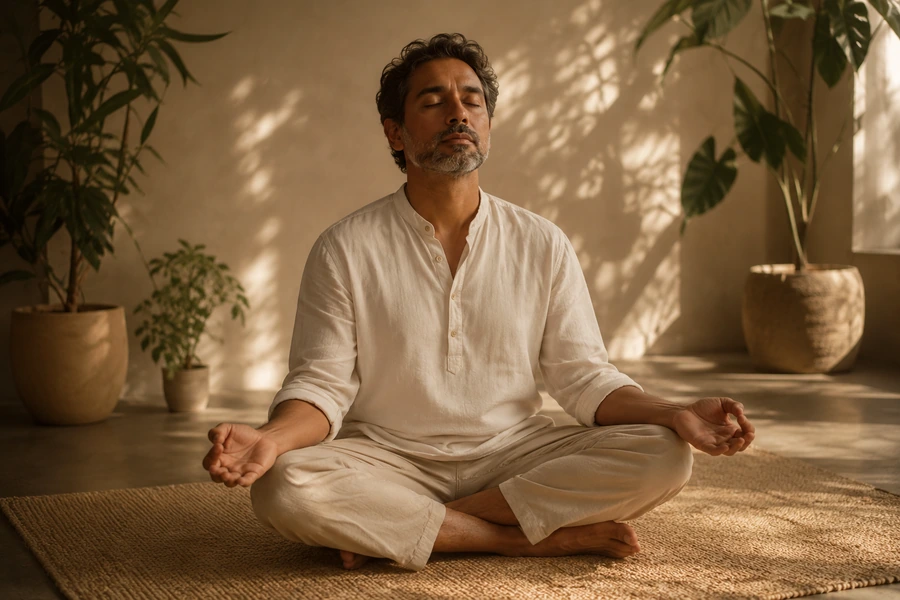
Inner peace practices help when daily life becomes louder than your inner voice. Messages arrive quickly. Responsibilities stack up. Other people’s emotions can fill the room. Your own needs become harder to hear. Peace may seem distant in those moments. Yet it can begin with one deliberate pause. You do not need a perfect schedule. You need a reliable return point. With patient repetition, peace becomes less fragile. It becomes something you can access again.
Stress feels different when you stop treating it as a personal failure. It becomes a signal. Signals need attention, not punishment. Ask what your stress is requesting. It may ask for rest. It may ask for clarity. It may ask for boundaries. A practical emotional calm method can help translate that signal. Peace grows when you respond with respect. That response builds trust inside yourself.
Breathing is simple, but it is not small. A slower exhale tells the body that danger has passed. That message softens tension. It also gives thoughts more room. Try breathing in gently. Then breathe out longer. Repeat without forcing anything. A helpful mindfulness for relaxation approach keeps the practice grounded. You are not chasing a special state. You are returning to presence.
Quiet time often disappears because it seems optional. In reality, it supports emotional regulation. It allows your thoughts to settle. It helps you notice fatigue earlier. Protecting quiet time may require boundaries. You might close a door. You might set a phone aside. You might take ten minutes before answering messages. These choices are modest. Their impact can be significant. Silence gives your nervous system space to recalibrate.
Peace creates room for honest self-reflection. Without it, growth can become another achievement chase. With it, growth becomes more compassionate. You see patterns without attacking yourself. You notice reactions without shame. You choose better because you understand more. A supportive personal growth resource can deepen this work. The best change feels steady. It does not require constant self-pressure.
Control can look responsible from the outside. Inside, it often feels exhausting. Many outcomes include other people, timing, and conditions beyond your reach. Peace grows when you separate influence from control. Influence invites wise action. Control demands impossible certainty. This distinction lowers tension. It helps you invest energy where it matters. You still care deeply. You simply stop carrying what was never yours.
The strongest practices feel like returning home. They do not demand perfection. They invite presence. Each quiet breath, honest reflection, and thoughtful boundary brings you back. Some days will feel easier than others. That variation is normal. Peace remains available even when emotions move. You learn to trust the return. Eventually, calm stops feeling like an exception. It becomes part of how you live.


Leave a comment